

Swimming Pool Remodeling Permits (Complete Guide 2026)
Thinking about updating your backyard oasis? Before the first tile comes off, there is one thing you cannot skip: swimming pool remodeling permits. At QPS Pool Remodeling, we have guided homeowners across the greater Houston area through this exact process, and we know how confusing the paperwork can feel. The good news is that once you understand the basics, permits are just another step on the way to a beautiful new pool.
In this complete 2026 guide, we break down when you need a permit, how to apply, what it costs, and what happens if you skip it. Let us make this simple.
Do You Need a Permit for Swimming Pool Remodeling?
The short answer is: it depends on the scope of the work. Cosmetic touch-ups often fly under the radar, but structural, electrical, or plumbing changes almost always require a permit. Local building departments in cities like Sugar Land, Katy, and Pearland each have their own rules, so what applies in one town may differ slightly in another.
As a general rule, you will likely need a permit if your project involves any of the following:
- Changing the size, shape, or depth of the pool
- Adding or relocating pool equipment like pumps, heaters, or filters
- New electrical wiring for lights, automation, or outlets
- Plumbing modifications or new water lines
- Installing or altering safety barriers and fencing
- Building attached structures like an outdoor kitchen or pergola nearby
- Major deck expansion or new construction around the pool
On the other hand, simple projects such as replastering the same pool shell or swapping out waterline tiles usually do NOT require a permit. But do not assume. Always confirm with your local authority first.
Types of Pool Remodeling Projects That Require Permits
Not every upgrade triggers a permit, but many popular ones do. Here is a closer look at the projects that typically need approval before work begins.
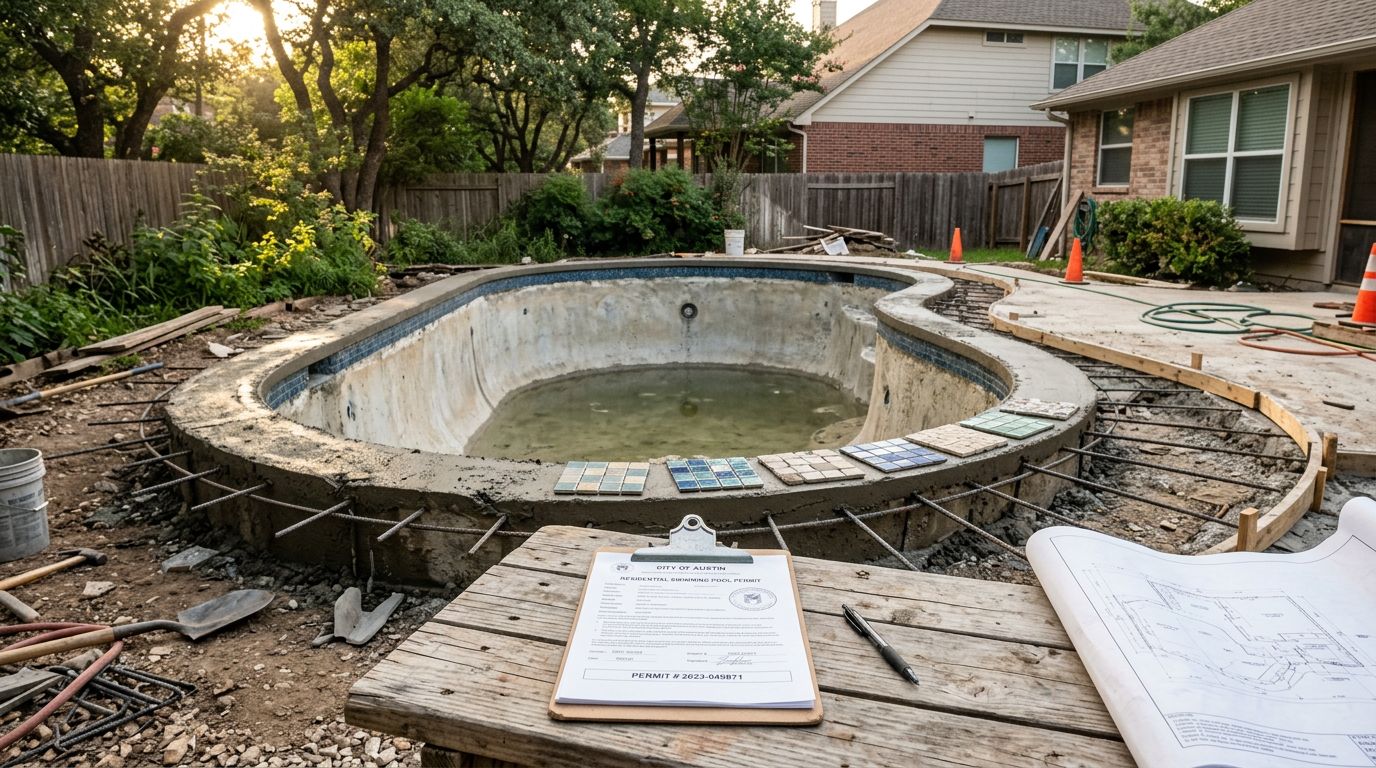
Structural Changes and Excavation
Any time you dig, expand, or alter the pool shell, the city wants to review your plans. This includes deepening the pool, adding a spa, or changing the overall footprint. Structural work affects safety and drainage, so inspectors take it seriously.
Electrical and Lighting Upgrades
Adding LED lighting, automation systems, or new outlets means electrical permits. Water and electricity are a dangerous mix, so these inspections protect you and your family. Even relocating an existing light fixture can require sign-off.
Plumbing and Equipment Relocation
Moving your pump, installing a new heater, or rerouting water lines falls under plumbing codes. These changes influence how your pool circulates and drains, which is why the city checks the work.
Outdoor Living Additions
If your remodel includes an outdoor kitchen, a fire pit, or a pergola, expect additional permits for those structures. Gas lines and electrical hookups for these features add another layer of review. Homeowners in areas like Sienna Plantation and Missouri City often bundle these projects together, and we help coordinate the paperwork for each.
Deck and Coping Work
Large deck resurfacing jobs, new coping, and expanded patios can require permits depending on square footage and materials. Smaller cosmetic refreshes may be exempt. If you are considering a full refresh, our team handling pool deck resurfacing in Missouri City can tell you exactly what your project needs.
How to Apply for a Swimming Pool Remodeling Permit
Applying for a permit does not have to be stressful. Most cities in the Houston area follow a similar process, and a good contractor will handle much of it for you. Here is the typical path from start to finish.
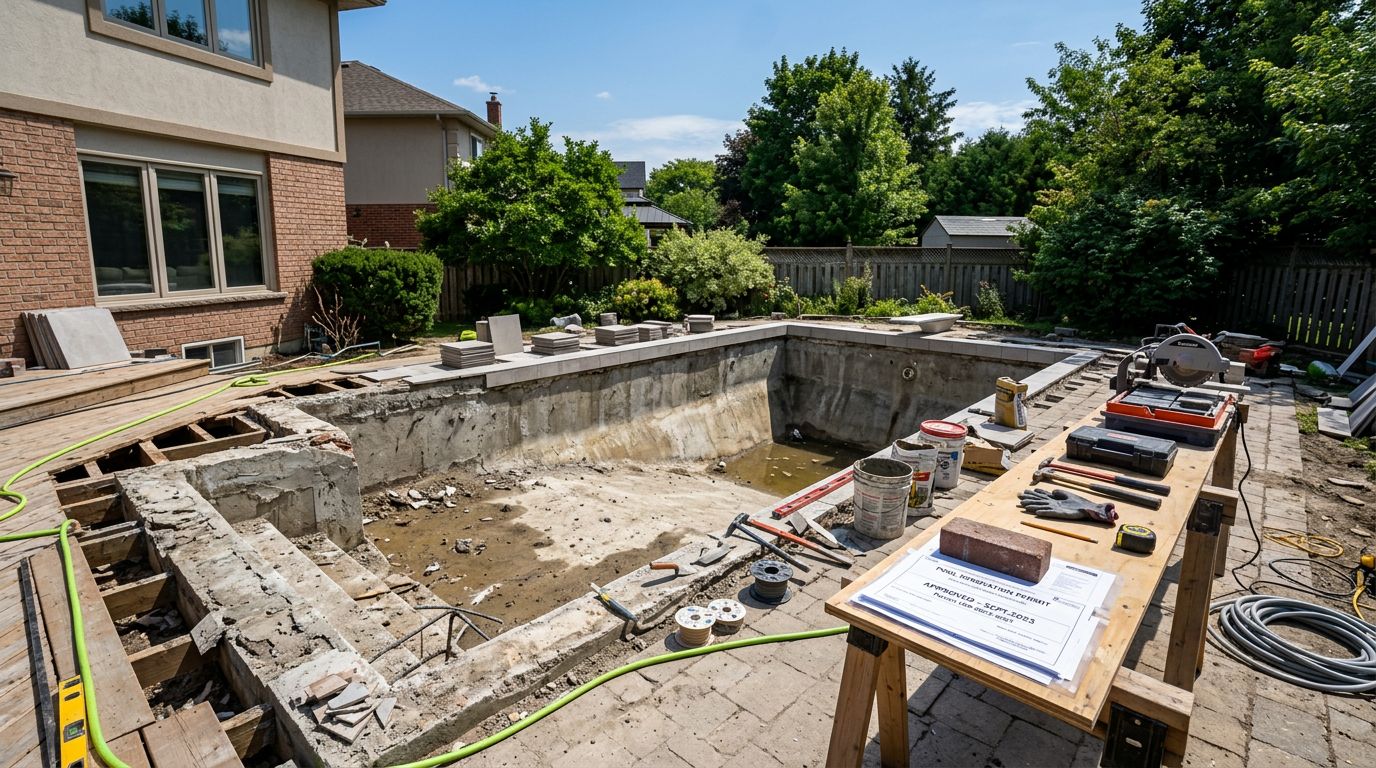
- Define your project scope. Write down exactly what you plan to change. Clear plans make everything faster.
- Gather your documents. This usually includes a site plan, drawings of the proposed work, and details on materials and equipment.
- Contact your local building department. Cities like Richmond, Stafford, and Fresno each have permit offices with specific forms.
- Submit your application. Many towns now accept online submissions, which speeds things up.
- Pay the permit fees. Fees vary by city and project type, which we cover below.
- Wait for plan review. An official checks your submission for code compliance.
- Schedule inspections. As work progresses, inspectors verify each phase meets standards.
- Get final approval. Once everything passes, your project is officially cleared.
Working with an experienced crew makes this far smoother. Our team offering swimming pool remodeling in Missouri City handles permit coordination as part of the service, so you are not stuck navigating city hall alone.
How Much Do Pool Remodeling Permits Cost in 2026?
Permit costs vary widely based on your city, the type of work, and the total project value. Some municipalities charge a flat fee, while others calculate the cost as a percentage of the estimated construction budget. Fees have crept up slightly in recent years, so plan ahead for 2026.
Here are the general cost ranges homeowners can expect. These are ESTIMATES only, and your local office will provide exact numbers.
- Basic remodeling permit: often $50 to $250 depending on the city
- Electrical permit: typically $50 to $200
- Plumbing permit: usually $50 to $200
- Structural or excavation permit: can range from $150 to $500 or more
- Outdoor kitchen or pergola permit: varies with gas and electrical additions
- Plan review fees: sometimes added on top, especially for larger projects
Keep in mind that permits are a small slice of the overall budget. When you look at the bigger picture, they protect your investment. If you want to understand how upgrades pay off long term, our breakdown of pool remodeling return on investment shows why doing the job right matters.
How Long Does It Take to Get a Pool Permit Approved?
Timelines depend on your city, the complexity of the project, and how busy the permit office is. Simple projects can be approved quickly, while structural work with multiple reviews takes longer. Spring and summer are peak seasons, so expect potential delays when everyone else is remodeling too.
Here is a rough guide to what you can expect in 2026:
- Simple cosmetic permits: often approved in a few days to a week
- Electrical or plumbing permits: typically one to two weeks
- Structural or excavation permits: can take two to four weeks or longer
- Complex multi-feature projects: may stretch four to six weeks with several review rounds
- Peak season delays: add extra time during spring and summer
The best way to avoid frustration is to submit complete, accurate paperwork the first time. Missing documents are the number one cause of delays. That is where a seasoned contractor really earns their keep. We know what each city wants and how to present it cleanly.
What Happens If You Remodel a Pool Without a Permit?
Skipping a permit might seem like a shortcut, but it can cost you dearly. Unpermitted work creates problems that follow you for years. Here is what you risk.
Fines and Stop-Work Orders
If the city discovers unpermitted work, they can issue fines and halt your project immediately. In some cases, the penalties are double the original permit fee. That shortcut suddenly gets expensive.
Forced Removal or Rework
Inspectors can require you to tear out completed work so they can verify it meets code. Imagine ripping up new tile or coping just to prove it was installed correctly. It is a painful and costly setback.
Problems Selling Your Home
When you sell, buyers and inspectors look for permit records. Unpermitted improvements can scare off buyers, lower your sale price, or stall the closing. Some lenders will not finance homes with unpermitted structures.
Safety and Liability Risks
Permits exist to protect people. Unpermitted electrical or structural work can be dangerous. If someone gets hurt, your insurance may deny the claim because the work was never approved. That leaves YOU on the hook.
Insurance Complications
Beyond liability, many policies require that major home improvements be permitted. Skipping the process could jeopardize your coverage when you need it most.
Conclusion
Swimming pool remodeling permits are not just red tape. They protect your family, your home value, and your peace of mind. Whether you are replastering, adding an outdoor kitchen, or resurfacing your deck, knowing when a permit is required keeps your project on track and legal. Cosmetic touch-ups may be exempt, but structural, electrical, and plumbing work almost always needs approval.
At QPS Pool Remodeling, we help homeowners across Missouri City, Sugar Land, Katy, Pearland, and beyond turn their backyard dreams into reality while handling the permit details along the way. Ready to start planning your pool transformation? Reach out to our team and let us guide you through every step, permits included.


